
Author : Red Hat
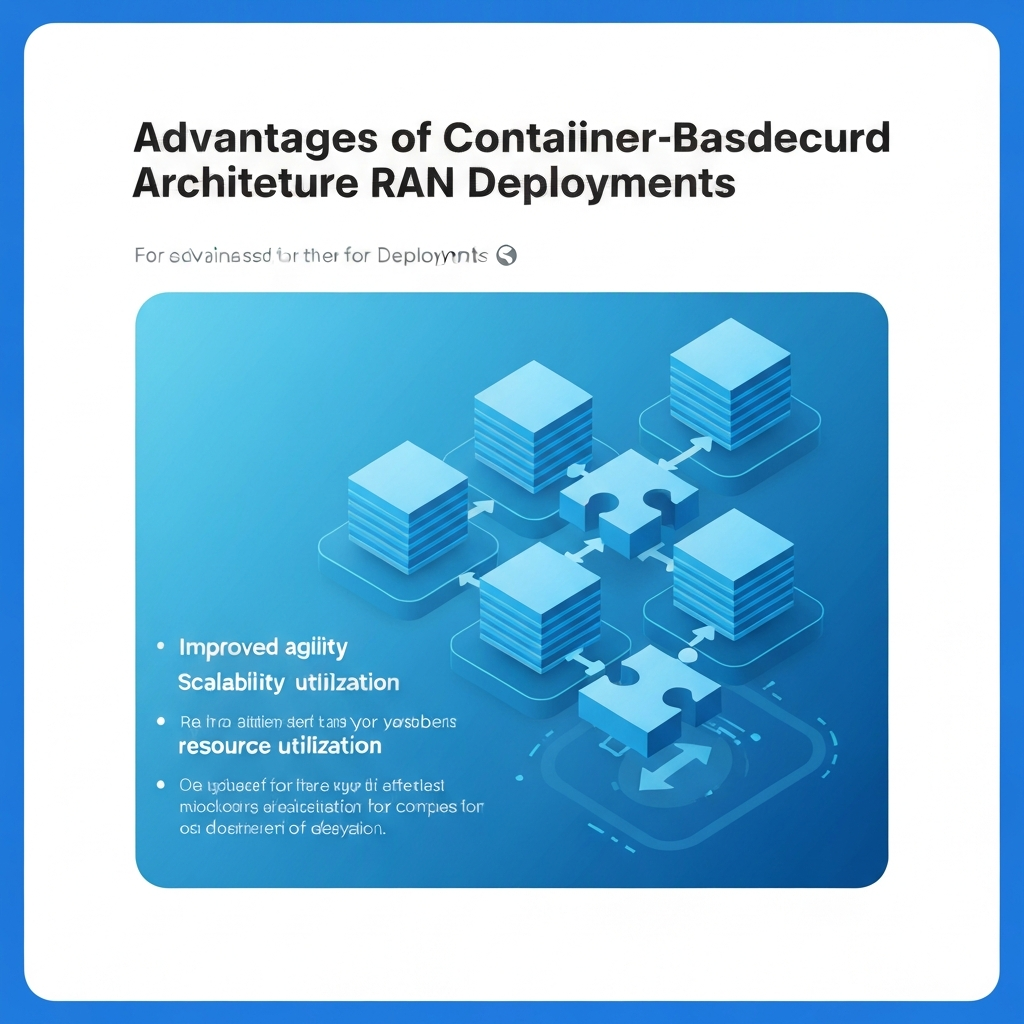
Advantages of Container-Based Architecture for RAN Deployments
In the rapidly evolving landscape of telecommunications, Radio Access Network (RAN) deployments are undergoing a significant transformation. You, as a network architect or operator, are likely exploring innovative ways to modernize your infrastructure, increase efficiency, and reduce operational costs. Container-based architecture offers a compelling solution, enabling you to build a more agile, scalable, and cost-effective RAN.
Introduction
Traditional RAN deployments often rely on monolithic, hardware-dependent systems. This approach presents several challenges, including limited scalability, complex management, and high operational expenses. Containerization, on the other hand, packages applications and their dependencies into isolated units, allowing them to run consistently across different environments. This shift towards a cloud-native approach empowers you to modernize your RAN infrastructure and unlock significant benefits.
Key Advantages of Container-Based Architecture for RAN
Let’s dive into the core advantages that container-based architecture brings to your RAN deployments:
- Simplify at Scale with Zero-Touch Infrastructure Provisioning:
- Automate the deployment and configuration of your RAN components.
- Reduce manual intervention, minimizing the risk of errors.
- Speed up deployment cycles, enabling faster time-to-market for new services.
- Increase Efficiency and Lower Costs:
- Optimize resource utilization by running multiple RAN functions on the same hardware.
- Reduce infrastructure costs by leveraging commodity hardware.
- Improve operational efficiency through automation and streamlined management.
- Deploy a Consistent Cloud-Native Platform:
- Ensure consistency across different deployment environments (on-premise, cloud, or hybrid).
- Leverage the benefits of cloud-native technologies, such as Kubernetes, for orchestration and management.
- Enhance portability and flexibility, making it easier to adapt to changing network demands.
- Enhanced Scalability and Agility:
- Scale RAN resources up or down dynamically based on demand.
- Quickly deploy new RAN functions and services.
- Respond rapidly to changing market needs and customer demands.
- Improved Reliability and Resilience:
- Isolate applications, minimizing the impact of failures.
- Automate the recovery of failed components.
- Increase network uptime and ensure a seamless user experience.
Best Practices for Containerizing Your RAN
To maximize the benefits of container-based architecture, consider these best practices:
- Choose the Right Containerization Platform: Kubernetes is a leading choice for orchestrating containerized applications in a production environment.
- Implement a Robust CI/CD Pipeline: Automate the build, testing, and deployment of your RAN components.
- Prioritize Security: Implement security best practices at every stage of the container lifecycle.
- Monitor and Manage Your Environment: Use monitoring tools to gain insights into the performance and health of your containerized applications.
- Start Small and Iterate: Begin with a pilot project to gain experience and refine your approach before deploying on a larger scale.
Conclusion
Container-based architecture offers a compelling path towards modernizing your RAN deployments. By embracing this approach, you can simplify operations, increase efficiency, and lower costs. The agility and scalability provided by containerization will empower you to meet the growing demands of today’s mobile networks. You can transform your RAN into a more flexible, resilient, and cost-effective infrastructure.
FAQ’s
- What is containerization? Containerization is a method of packaging software applications with all of their necessary dependencies into a single unit called a container. This enables the applications to run consistently across different environments.
- How does containerization benefit RAN deployments? It simplifies deployments, increases efficiency, reduces costs, enhances scalability, and improves reliability.
- What are some popular container orchestration platforms? Kubernetes is the leading platform for orchestrating containerized applications.
- What are the key steps in containerizing a RAN? Choose a containerization platform, implement a CI/CD pipeline, prioritize security, monitor your environment, and start with a pilot project.
- Is containerization secure? Containerization can be very secure, but it requires implementing security best practices throughout the container lifecycle.
“`