
Author : Fivetran
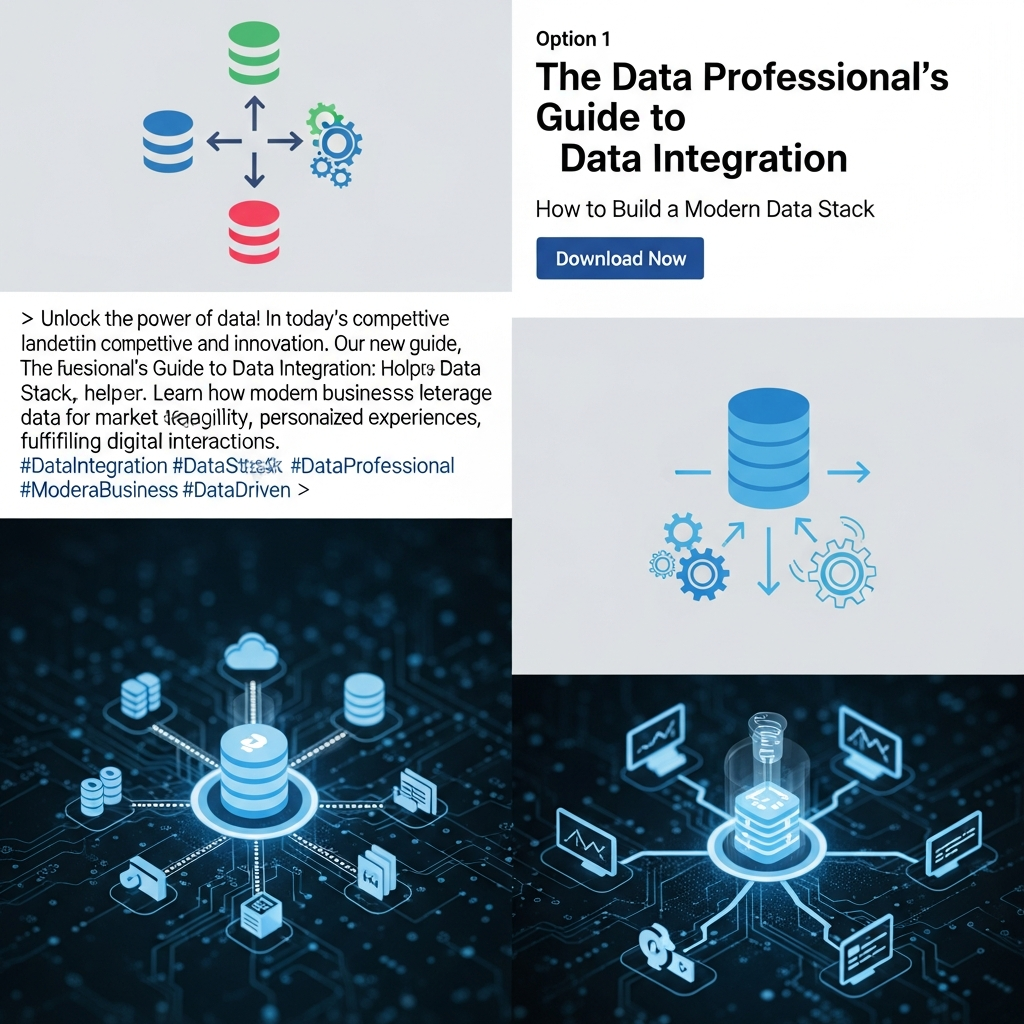
The Data Professional’s Guide to Data Integration: How to Build a Modern Data Stack
Summary
In today’s data-driven world, efficient data integration is crucial for business success. This guide provides a comprehensive overview of how data professionals can build a modern data stack. You’ll learn the key components, best practices, and essential considerations for integrating data effectively, enabling you to make informed decisions and gain a competitive edge. This guide will walk you through the process, from understanding your needs to choosing the right tools and implementing a robust data integration strategy.
Introduction
Highly competitive companies are fueled by data. Modern businesses leverage data to quickly adapt to market changes and innovate with new products. As a data professional, you understand that data isn’t just an asset; it’s the lifeblood of your organization. Companies that are data-driven also provide their customers with personalized experiences and create more fulfilling digital interactions for everyone, including employees.
But raw data is often scattered across various sources, formats, and systems. This is where data integration comes in. Effective data integration is the foundation upon which you build your modern data stack, a comprehensive system for collecting, processing, and analyzing data to drive insights and actions. Building a modern data stack empowers you to:
- Make data-driven decisions: Access a unified view of your data for better analysis.
- Improve operational efficiency: Automate data workflows and reduce manual processes.
- Gain a competitive advantage: React faster to market trends and customer needs.
Understanding the Modern Data Stack
The modern data stack is a collection of tools and technologies designed to manage the entire data lifecycle. It typically includes the following key components:
- Data Sources: These are the origins of your data, such as databases, applications, and cloud services.
- Data Ingestion/Extraction, Transformation, and Load (ETL): Tools to move data from source to destination.
- Data Lake/Data Warehouse: A central repository for storing and managing data.
- Data Transformation: Processes to clean, transform, and enrich your data.
- Data Catalog: Tools to document and manage metadata.
- Business Intelligence (BI) and Analytics: Tools for visualizing and analyzing data.
- Data Governance and Security: Ensures data quality, compliance, and security.
Key Steps to Build Your Modern Data Stack
Building a modern data stack is a process, not an event. Follow these steps for successful data integration:
- Define Your Business Goals and Needs: What questions do you want to answer? What insights are you seeking? Clearly define your objectives.
- Identify Your Data Sources: Where does your data reside? Inventory all your data sources.
- Choose the Right Tools: Select tools that fit your budget, technical expertise, and business requirements. Consider these categories:
- Data Ingestion: Fivetran, Stitch, Airbyte
- Data Warehousing: Snowflake, Amazon Redshift, Google BigQuery
- Data Transformation: dbt, Trifacta
- BI and Analytics: Tableau, Power BI, Looker
- Design Your Data Architecture: Plan how data will flow through your stack.
- Implement Data Integration Pipelines: Build and configure ETL/ELT pipelines to move and transform data.
- Establish Data Governance: Implement policies and procedures to ensure data quality, security, and compliance.
- Monitor and Optimize: Continuously monitor your data pipelines and make adjustments as needed.
Best Practices for Data Integration
To maximize the effectiveness of your data integration efforts, keep these best practices in mind:
- Prioritize Data Quality: Implement data validation and cleansing processes.
- Automate Where Possible: Automate data pipelines to reduce manual effort and errors.
- Embrace a Scalable Architecture: Design your stack to handle growing data volumes.
- Ensure Data Security: Implement robust security measures to protect sensitive data.
- Document Everything: Maintain thorough documentation of your data processes.
- Foster Collaboration: Encourage communication between data engineers, analysts, and business users.
Conclusion
Building a modern data stack is an ongoing journey. By following this guide, you’ve equipped yourself with the knowledge and strategies necessary to implement effective data integration, drive insights, and gain a competitive edge. Embrace the power of data, stay curious, and continue to explore new technologies and approaches to refine your data stack. Your ability to integrate and leverage data effectively will be a key differentiator in the years to come.
Frequently Asked Questions (FAQ)
Here are some frequently asked questions about data integration and modern data stacks:
What is the difference between ETL and ELT?
ETL (Extract, Transform, Load) transforms data before loading it into the data warehouse. ELT (Extract, Load, Transform) loads the data into the data warehouse first and then transforms it. ELT is often preferred in modern data stacks because it leverages the processing power of the data warehouse.
What are the key benefits of a modern data stack?
A modern data stack offers improved decision-making, increased operational efficiency, better customer experiences, and a competitive advantage through data-driven insights.
How do I choose the right tools for my data stack?
Consider your business needs, technical expertise, budget, and scalability requirements. Evaluate different tools based on features, pricing, and integration capabilities. Conduct pilot projects before making final decisions.
What role does data governance play?
Data governance ensures data quality, security, and compliance with regulations. It involves establishing policies, procedures, and responsibilities for managing data throughout its lifecycle.
“`