
Author : AEM
“`html
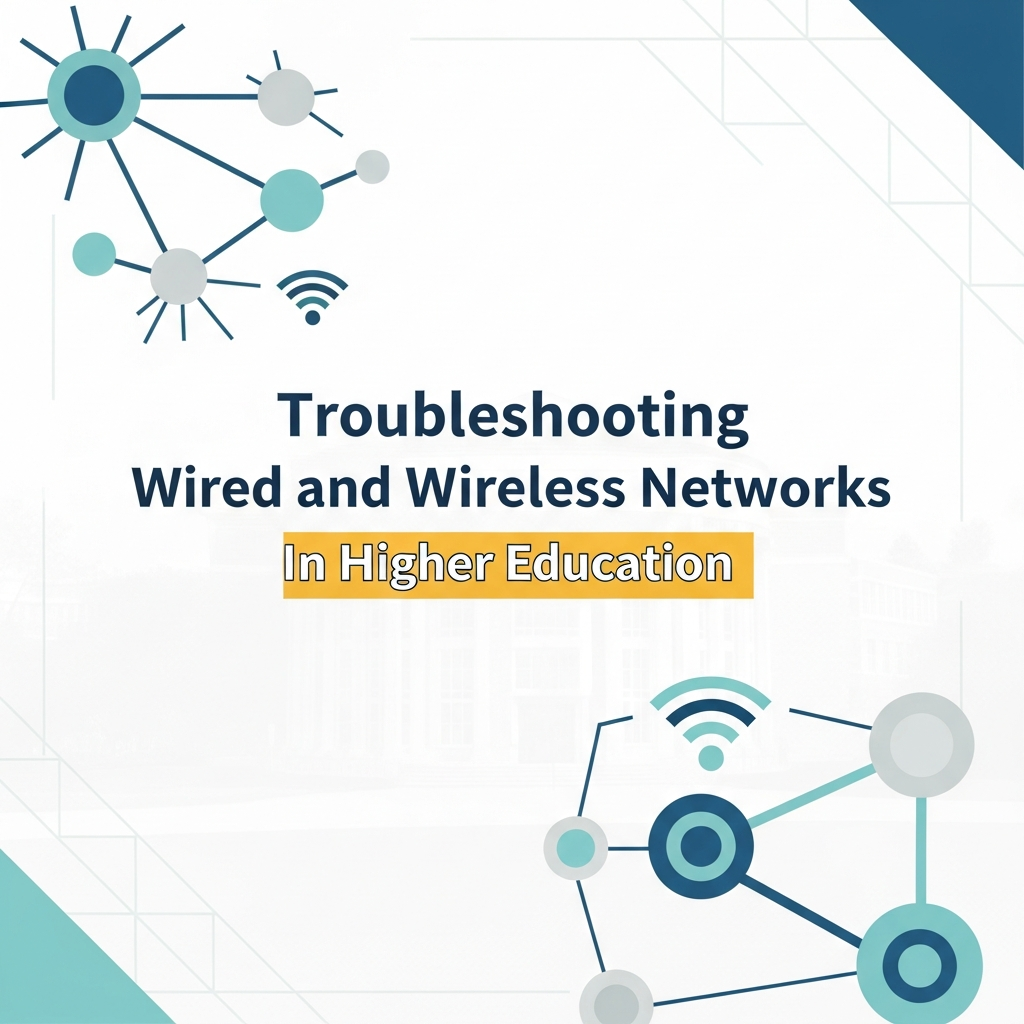
Troubleshooting Wired and Wireless Networks in Higher Education
In the dynamic landscape of higher education, robust and reliable network infrastructure is not just a convenience; it’s a necessity. From supporting critical research to enabling seamless online learning and providing essential services for students, faculty, and staff, your network is the backbone of your institution’s operations. However, the complex nature of higher education networks, often a blend of cutting-edge technologies and legacy systems, can present unique troubleshooting challenges. This comprehensive guide will equip you with the knowledge and strategies you need to effectively troubleshoot and maintain both wired and wireless networks within your higher education environment.
Introduction
Network infrastructures within higher education are often far more complex than those in other business sectors. You’ll likely manage a mix of traditional enterprise-grade technologies with bleeding-edge infrastructure, especially in fields like science, technology, engineering, and math (STEM). Moreover, your campus likely spans multiple buildings and caters to a 24/7 population, including residential students and faculty. This necessitates a heightened reliance on public safety and IoT technologies. This guide is designed to help you navigate these complexities and maintain a high-performing network.
Key Troubleshooting Areas
Let’s delve into five key areas where IT staff frequently encounter challenges in higher education networks, along with actionable tips to overcome them:
1. Copper and Fiber Optic Cable Testing
Ensuring the physical layer of your network is functioning correctly is paramount. Cable issues can cause intermittent connectivity problems, slow speeds, and complete network outages.
- Testing Tools: Utilize cable testers to verify copper cabling for shorts, opens, and wiremap issues. For fiber optics, use an Optical Time Domain Reflectometer (OTDR) to identify breaks, bends, or excessive loss.
- Regular Testing: Implement a regular testing schedule for both copper and fiber optic cables, especially after any construction, moves, or changes.
- Documentation: Maintain detailed documentation of your cabling infrastructure, including test results and any identified issues.
2. Wireless Network Performance and Coverage
Wireless networks are critical for student and faculty access. Poor performance or inadequate coverage can hinder learning and research.
- Site Surveys: Conduct thorough site surveys using specialized tools to map wireless signal strength and identify dead zones.
- Channel Planning: Optimize your wireless channel plan to minimize interference between access points. Consider using a Wi-Fi analyzer to identify overlapping channels.
- Regular Monitoring: Use network monitoring tools to track wireless performance metrics, such as signal strength, signal-to-noise ratio (SNR), and data rates.
3. Device Connectivity Issues
Troubleshooting device connectivity can be time-consuming. From student laptops to specialized lab equipment, you’ll encounter a wide array of devices with varying network configurations.
- IP Address Conflicts: Implement a robust Dynamic Host Configuration Protocol (DHCP) server to manage IP address assignments and prevent conflicts.
- Authentication Problems: Verify that users are properly authenticated to the network, and that their credentials are correct.
- Firewall Rules: Review firewall rules to ensure they are not blocking network traffic.
4. Network Security and Intrusion Detection
Higher education institutions are prime targets for cyberattacks. Protecting your network from threats is essential.
- Intrusion Detection/Prevention Systems (IDS/IPS): Deploy IDS/IPS solutions to monitor network traffic for suspicious activity and block potential threats.
- Security Audits: Conduct regular security audits to identify vulnerabilities and ensure compliance with security best practices.
- User Education: Educate users on cybersecurity threats and best practices, such as strong password management and recognizing phishing attempts.
5. Network Segmentation and VLAN Management
Network segmentation using Virtual LANs (VLANs) improves security, performance, and manageability.
- VLAN Configuration: Properly configure VLANs to segregate network traffic and isolate sensitive resources.
- Access Control Lists (ACLs): Implement ACLs to control traffic flow between VLANs and restrict access to specific network resources.
- Monitoring and Maintenance: Regularly review and update your VLAN and ACL configurations to adapt to changing network needs and security threats.
Conclusion
Maintaining a reliable network in a higher education environment requires a proactive and systematic approach. By focusing on these key troubleshooting areas, you can minimize downtime, enhance performance, and provide a seamless network experience for your users. Remember to stay updated with the latest technologies and best practices to ensure your network infrastructure continues to meet the evolving needs of your institution.
Frequently Asked Questions (FAQ)
- What are the most common causes of network outages in higher education? Common causes include cable failures, wireless interference, DHCP issues, and cyberattacks.
- What tools are essential for troubleshooting wireless network issues? Wireless site survey tools, Wi-Fi analyzers, and network monitoring software are essential.
- How often should I test my network cabling? Regularly test cabling, especially after any physical changes or suspected issues. The frequency depends on your network’s size and activity. Quarterly or bi-annually is a good starting point.
- What are the benefits of network segmentation? Network segmentation improves security, enhances performance by reducing broadcast domains, and simplifies network management.
- How can I improve wireless coverage in a multi-building campus? Implement a well-designed wireless deployment plan with strategic access point placement, optimized channel selection, and regular site surveys. Consider using mesh networks to extend coverage.
“`