
Author : REDHAT
“`html
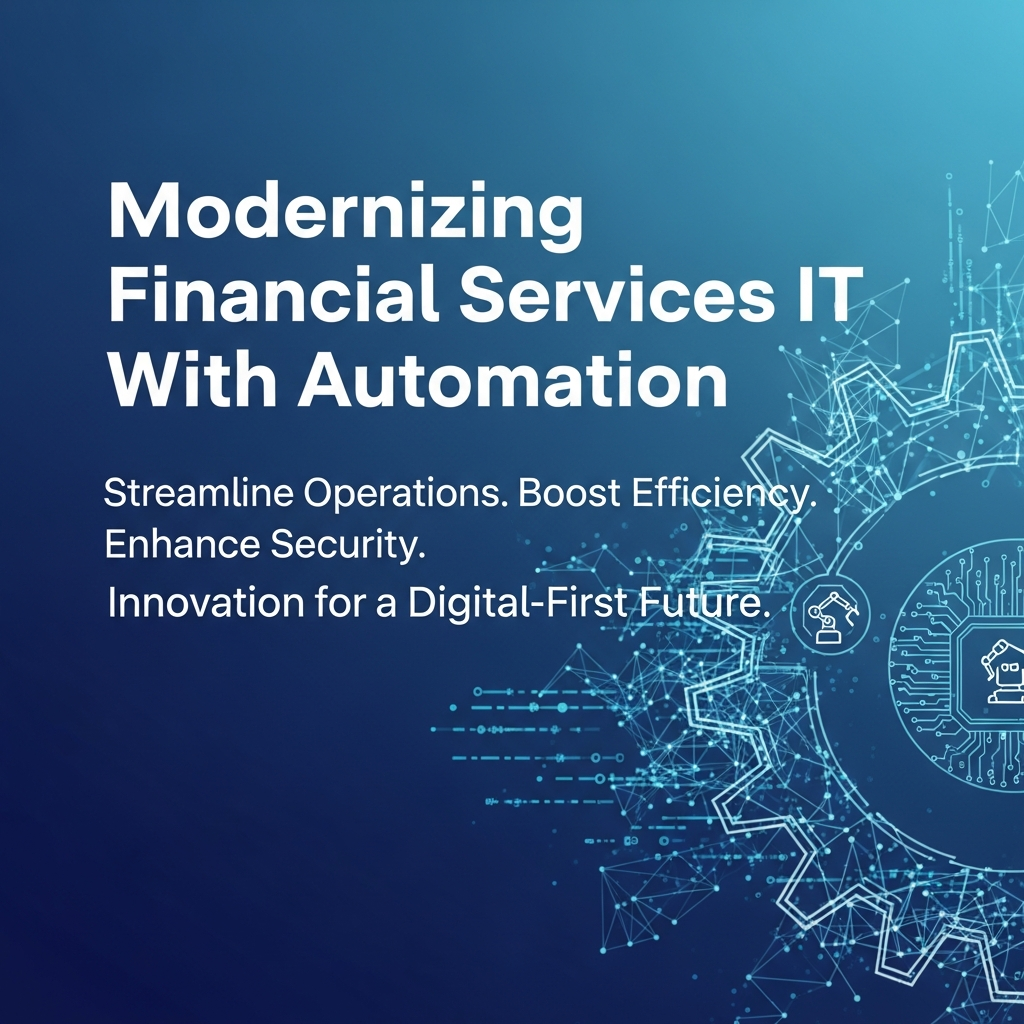
Modernizing Financial Services IT With Automation
In the fast-paced world of financial services, staying ahead requires more than just adapting; it demands transformation. Manual processes and repetitive tasks can significantly slow you down, hindering your ability to innovate and respond to market changes. That’s where IT automation comes in. This guide will walk you through the journey of modernizing your financial services IT with automation, helping you streamline operations, reduce costs, and boost efficiency.
Summary
Financial institutions are increasingly turning to IT automation to overcome the limitations of outdated technology and manual processes. By implementing automation, you can standardize processes, minimize errors, and improve overall operational efficiency. This blog post explores the benefits of automation, key strategies for successful implementation, and best practices to ensure a smooth transition. It also covers the importance of choosing the right automation platform and the impact of automation on various financial services functions.
Introduction
Financial organizations face constant pressure to improve efficiency, reduce operational costs, and enhance customer experience. Traditional IT infrastructures, often weighed down by manual processes, can no longer keep up with these demands. This is where automation becomes a critical enabler.
Why IT Automation?
- Increased Efficiency: Automate repetitive tasks, freeing up your team for more strategic initiatives.
- Reduced Costs: Minimize manual labor and associated errors, leading to significant cost savings.
- Improved Compliance: Ensure adherence to regulatory requirements through automated processes and audit trails.
- Enhanced Customer Experience: Faster processing times and fewer errors lead to a better customer experience.
Key Factors for Successful Automation
Implementing IT automation successfully involves careful planning and execution. Consider these key factors:
- Identify and Prioritize Processes: Start by identifying processes that are ripe for automation. Prioritize those that offer the greatest impact and return on investment.
- Choose the Right Automation Platform: Select a platform that suits your specific needs and integrates well with your existing systems. Consider factors like scalability, ease of use, and vendor support.
- Develop a Clear Automation Strategy: Define your goals, objectives, and the steps required to achieve them. This strategy should align with your overall business objectives.
- Ensure Proper Training and Change Management: Equip your team with the necessary skills and knowledge to adopt the new automated processes. Manage change effectively to ensure a smooth transition.
- Monitor and Optimize Continuously: Regularly monitor the performance of your automated processes and make adjustments as needed to optimize efficiency and effectiveness.
Strategies for Modernizing Financial Services IT with Automation
Here are some effective strategies to help you modernize your IT infrastructure using automation:
- Robotic Process Automation (RPA): Automate rule-based tasks performed by human workers, such as data entry, reconciliation, and report generation.
- Workflow Automation: Streamline business processes by automating the flow of information and tasks between different systems and departments.
- AI-Powered Automation: Integrate artificial intelligence (AI) to automate more complex tasks, such as fraud detection and customer service.
- Infrastructure Automation: Automate IT infrastructure management tasks, such as server provisioning, configuration, and maintenance.
Tips for Implementation
Follow these tips to ensure a smooth automation journey:
- Start Small: Begin with pilot projects to test and refine your approach before scaling up.
- Involve Stakeholders: Get input from all relevant stakeholders to ensure the automation solution meets their needs.
- Focus on Security: Implement robust security measures to protect sensitive financial data.
- Document Everything: Maintain detailed documentation of your automation processes for easy maintenance and troubleshooting.
- Measure Results: Track key performance indicators (KPIs) to measure the success of your automation efforts.
Conclusion
Modernizing your financial services IT with automation is no longer a luxury, but a necessity. By embracing automation, you can transform your operations, enhance customer experience, and gain a competitive edge. Start your automation journey today, and watch your organization thrive in the digital age.
FAQ’s
Here are some frequently asked questions about IT automation in financial services:
- What are the main benefits of IT automation in financial services? Automation increases efficiency, reduces costs, improves compliance, and enhances customer experience.
- Which processes are best suited for automation? Processes that are rule-based, repetitive, and involve large volumes of data are ideal candidates for automation.
- What are the key considerations when choosing an automation platform? Consider scalability, ease of use, integration capabilities, vendor support, and security features.
- How do I ensure a successful automation implementation? Start with a clear strategy, involve stakeholders, provide proper training, and continuously monitor and optimize your processes.
- What is the role of AI in financial services automation? AI can automate complex tasks, such as fraud detection, customer service, and risk management.
“`