
Author : ESG
“`html
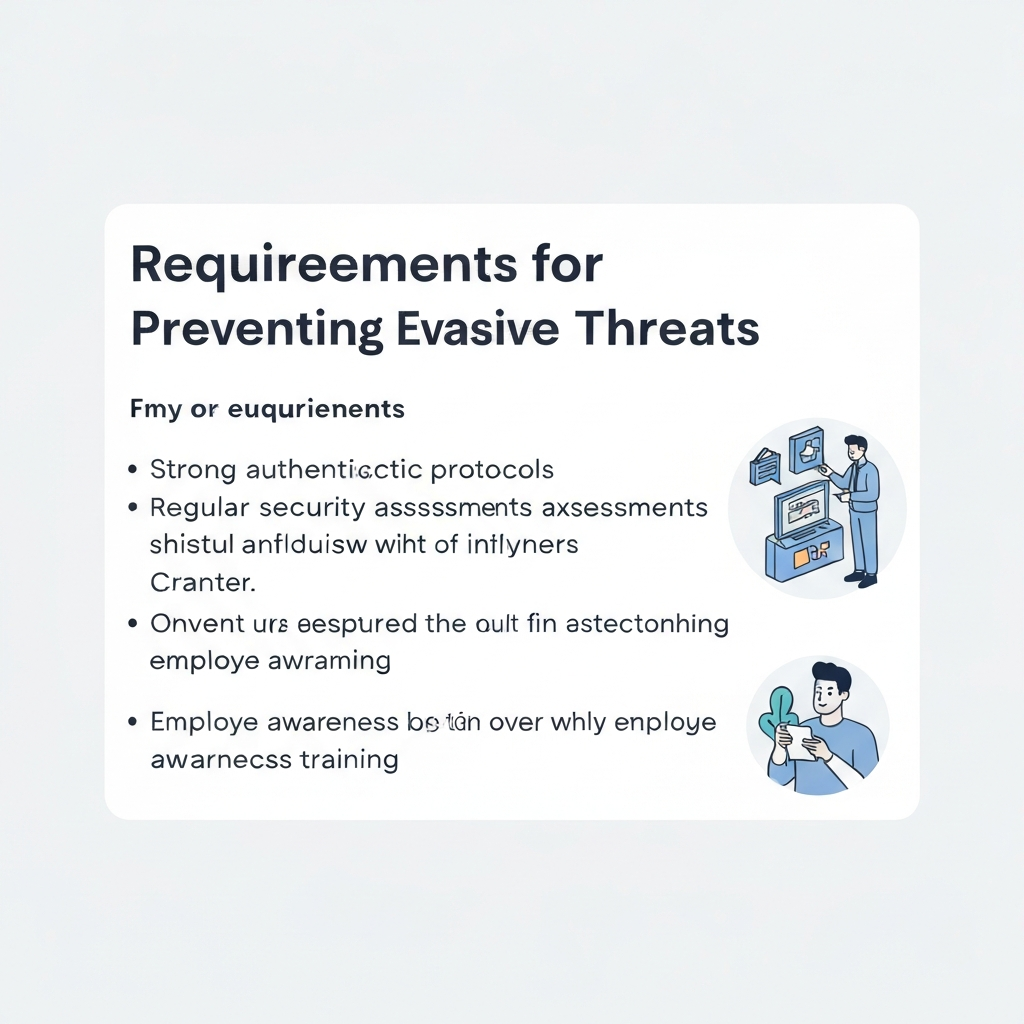
Requirements for Preventing Evasive Threats: A Comprehensive Guide
In today’s ever-evolving threat landscape, attackers are constantly refining their tactics to evade traditional security measures. They leverage sophisticated techniques to remain undetected, making it crucial for organizations to adopt a proactive and layered approach to threat prevention. This guide will provide you with the essential requirements for effectively preventing evasive threats and safeguarding your valuable assets.
Introduction: The Rising Tide of Evasive Threats
Evasive threats are a growing concern for businesses of all sizes. Attackers utilize a variety of methods to bypass traditional security controls, including:
- Pre-built attack tools: Ready-made tools that simplify the attack process.
- Stealthy communication: Techniques to hide their communications and activities.
- Advanced phishing: Sophisticated social engineering to trick users into divulging sensitive information.
- Exfiltration avenues: Methods for extracting stolen data without detection.
These tactics enable attackers to compromise systems, steal data, and cause significant damage before you even realize you’ve been targeted. To counter these threats, you must evolve your security strategy.
Key Requirements for Preventing Evasive Threats
Implementing a robust defense against evasive threats requires a multi-faceted approach. Here are the core requirements:
1. Advanced Threat Detection Technologies
Traditional signature-based detection is no longer sufficient. You need to incorporate advanced technologies that can identify and respond to sophisticated attacks.
- Machine Learning (ML): Implement ML algorithms to analyze behavior, detect anomalies, and identify threats in real-time.
- Behavioral Analysis: Monitor user and system behavior to identify deviations from the norm, indicating potential malicious activity.
- Advanced Analytics: Leverage advanced analytics to process large datasets, identify patterns, and uncover hidden threats.
2. Proactive Threat Hunting
Don’t just wait for alerts; actively search for threats within your environment.
- Threat Intelligence Integration: Integrate threat intelligence feeds to stay informed about the latest threats and attack vectors.
- Regular Security Assessments: Conduct penetration testing and vulnerability assessments to identify weaknesses in your defenses.
- Incident Response Planning: Develop and regularly test your incident response plan to ensure you can effectively respond to and contain threats.
3. Layered Security Architecture
A single point of failure can be disastrous. Implement a layered security architecture to provide multiple lines of defense.
- Endpoint Detection and Response (EDR): Protect endpoints with EDR solutions that monitor and respond to threats.
- Network Segmentation: Divide your network into segments to limit the impact of a breach.
- Multi-Factor Authentication (MFA): Implement MFA to protect user accounts and prevent unauthorized access.
4. User Awareness and Training
Your employees are your first line of defense. Educate them on the latest threats and how to identify and report suspicious activity.
- Phishing Awareness Training: Conduct regular training to educate employees about phishing techniques and how to avoid them.
- Security Best Practices: Promote and enforce security best practices, such as strong password management and secure browsing habits.
- Simulated Phishing Campaigns: Regularly test your employees’ ability to identify phishing emails through simulated campaigns.
Tips for Improving Your Evasive Threat Prevention
To further enhance your defenses, consider these additional tips:
- Regularly Update Security Tools: Keep all security software up-to-date with the latest patches and security updates.
- Monitor Security Logs: Continuously monitor security logs for suspicious activity and potential threats.
- Collaborate and Share Information: Share threat intelligence with other organizations and participate in industry-wide threat sharing initiatives.
- Automate Security Processes: Automate security tasks such as threat detection and incident response to improve efficiency and reduce response times.
Conclusion: Staying Ahead of the Curve
Preventing evasive threats requires a proactive, multi-layered approach that combines advanced technologies, proactive threat hunting, a layered security architecture, and user awareness. By implementing the requirements and tips outlined in this guide, you can significantly enhance your ability to detect and respond to sophisticated attacks. Remember, the threat landscape is constantly evolving, so continuous improvement and adaptation are essential to stay ahead of the curve and protect your organization from harm.
Frequently Asked Questions (FAQ)
Evasive threats are malicious attacks that use sophisticated techniques to bypass traditional security measures and avoid detection.
Machine learning enables real-time analysis of behavior, anomaly detection, and identification of hidden threats that traditional methods might miss.
Conduct regular phishing awareness training, promote security best practices, and run simulated phishing campaigns to educate employees.
A layered security architecture provides multiple lines of defense, such as EDR, network segmentation, and MFA, to protect against a variety of threats.
“`