
Author : LOOKOUT
“`html
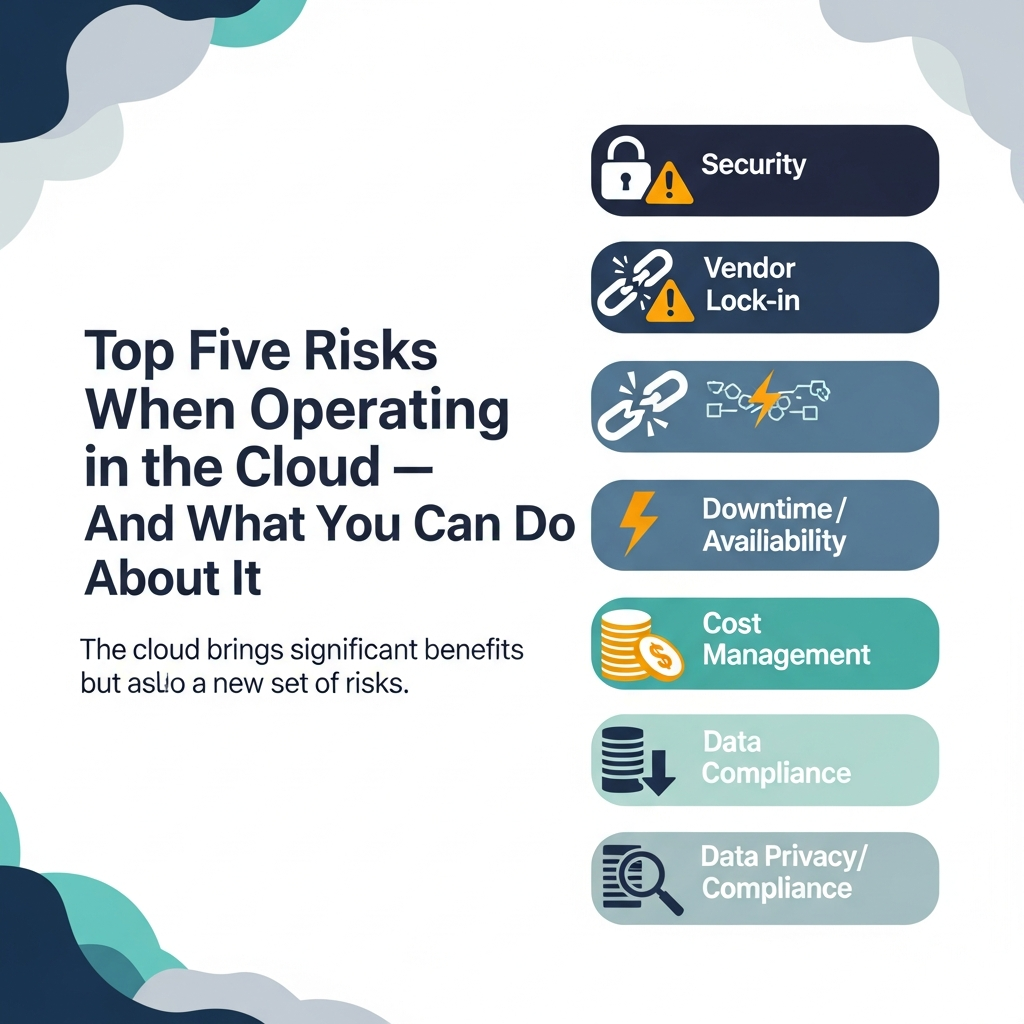
Top Five Risks When Operating in the Cloud — And What You Can Do About It
The cloud has revolutionized how businesses operate, offering unprecedented scalability, flexibility, and cost savings. However, migrating to the cloud isn’t without its challenges. While the benefits are numerous, it’s crucial to understand the potential risks involved. This guide will walk you through the top five risks when operating in the cloud and provide actionable steps to mitigate them. By understanding these risks and implementing the suggested strategies, you can confidently navigate the cloud landscape and maximize its advantages.
Summary
Operating in the cloud presents significant opportunities, but also introduces new security, compliance, and operational challenges. This blog post explores the top five risks associated with cloud adoption, including security breaches, data loss, compliance issues, vendor lock-in, and unexpected costs. We’ll delve into each risk, providing practical solutions and best practices to help you safeguard your data, maintain compliance, and optimize your cloud strategy.
Introduction
The cloud has become the backbone of modern business, enabling organizations to innovate faster and reach new heights. Whether you’re a startup or a large enterprise, the cloud offers a compelling value proposition. But with great power comes great responsibility. Understanding the potential pitfalls of cloud adoption is essential for ensuring a secure, compliant, and cost-effective cloud journey. Let’s dive into the top five risks and how to address them.
The Top Five Risks
1. Security Breaches and Data Loss
One of the most significant concerns when moving to the cloud is the potential for security breaches and data loss. This can stem from various sources, including:
- Insider threats: Malicious or unintentional actions by employees or contractors.
- External attacks: Hackers targeting vulnerabilities in your cloud infrastructure.
- Misconfigurations: Errors in setting up security controls.
- Data leaks: Unintentional exposure of sensitive information.
What you can do:
- Implement strong access controls and multi-factor authentication (MFA).
- Regularly monitor your cloud environment for suspicious activity.
- Encrypt data both in transit and at rest.
- Conduct regular security audits and penetration testing.
- Use a Web Application Firewall (WAF) to protect against common web attacks.
- Implement robust data loss prevention (DLP) strategies.
2. Compliance and Regulatory Issues
Operating in the cloud requires you to adhere to various compliance regulations, such as GDPR, HIPAA, and PCI DSS. Failure to comply can lead to hefty fines and reputational damage. Key considerations include:
- Data residency: Ensuring your data is stored in the correct geographical locations.
- Data privacy: Protecting sensitive customer data.
- Regulatory requirements: Meeting specific industry regulations.
What you can do:
- Choose a cloud provider that offers the necessary compliance certifications.
- Implement robust data governance policies.
- Regularly audit your cloud environment for compliance.
- Use compliance automation tools.
- Understand the shared responsibility model: The cloud provider is responsible for the security *of* the cloud, but you are responsible for the security *in* the cloud.
3. Vendor Lock-in
Vendor lock-in occurs when you become overly reliant on a specific cloud provider, making it difficult and expensive to switch to another provider. This can limit your flexibility and negotiating power. Considerations include:
- Proprietary services: Using services that are unique to a particular provider.
- Data migration challenges: The complexity of moving your data to a new provider.
- Integration complexity: How well your applications integrate with your current provider.
What you can do:
- Adopt a multi-cloud or hybrid cloud strategy.
- Use open standards and APIs.
- Design your applications to be portable.
- Regularly evaluate your cloud provider and consider alternatives.
4. Unexpected Costs and Budget Overruns
Cloud pricing models can be complex, and it’s easy to incur unexpected costs. This can result from:
- Unused resources: Paying for resources you’re not using.
- Data transfer fees: Costs associated with moving data in and out of the cloud.
- Hidden costs: Additional charges for specific services.
What you can do:
- Regularly monitor your cloud spending.
- Use cost management tools to track and optimize usage.
- Right-size your resources to match your needs.
- Take advantage of reserved instances or committed use discounts.
- Implement an effective cloud financial management (FinOps) strategy.
5. Operational Challenges
Managing a cloud environment can be complex, requiring specialized skills and knowledge. Operational challenges include:
- Skills gap: A lack of in-house cloud expertise.
- Performance issues: Managing the performance of your cloud applications.
- Downtime: Ensuring the availability of your cloud services.
What you can do:
- Invest in cloud training and certifications for your team.
- Automate your cloud operations.
- Implement robust monitoring and alerting systems.
- Use Infrastructure as Code (IaC) to manage your cloud infrastructure.
- Develop a comprehensive disaster recovery plan.
Conclusion
Moving to the cloud offers significant benefits, but it’s crucial to be aware of the potential risks. By understanding these top five risks—security breaches, data loss, compliance issues, vendor lock-in, unexpected costs, and operational challenges—and implementing the strategies outlined in this guide, you can confidently navigate the cloud landscape and maximize its advantages. Take proactive steps to secure your data, maintain compliance, and optimize your cloud strategy, and you’ll be well-positioned for success in the cloud.
FAQ’s
Q: What is the shared responsibility model in cloud computing?
A: The shared responsibility model defines the security responsibilities between the cloud provider and the customer. The provider is responsible for the security *of* the cloud (e.g., the underlying infrastructure), while the customer is responsible for the security *in* the cloud (e.g., data, applications, and user access).
Q: How can I prevent vendor lock-in?
A: Use open standards, adopt a multi-cloud or hybrid cloud strategy, and design your applications to be portable.
Q: What are some best practices for managing cloud costs?
A: Regularly monitor your cloud spending, right-size your resources, take advantage of discounts, and implement a cloud financial management (FinOps) strategy.
Q: How do I ensure compliance in the cloud?
A: Choose a cloud provider with relevant compliance certifications, implement robust data governance policies, and regularly audit your cloud environment.
Q: How can I improve cloud security?
A: Implement strong access controls, encrypt data, regularly monitor your environment, and conduct security audits and penetration testing.
“`