
Author : FIELD
“`html
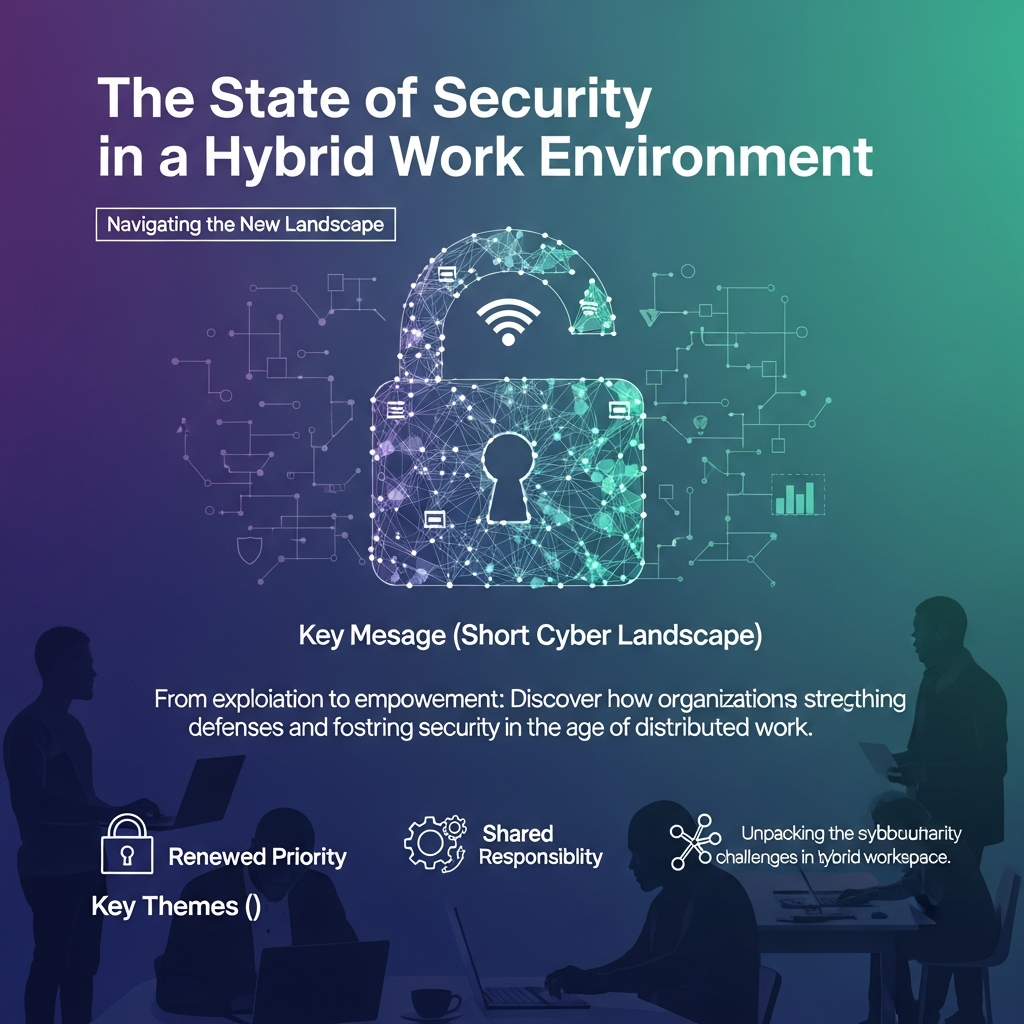
The State of Security in a Hybrid Work Environment
The shift to hybrid work has fundamentally changed the landscape of cybersecurity. You’re likely navigating a complex web of new challenges and opportunities. This guide provides a comprehensive overview of the current state of security, offering insights, best practices, and actionable advice to fortify your organization against evolving threats.
Introduction
The years 2020 and 2021 witnessed a surge in cyberattacks and security incidents, significantly influenced by the rapid adoption of remote and hybrid work models. As workforces dispersed, traditional security architectures struggled to adapt to the expanded attack surface. Businesses worldwide found themselves increasingly vulnerable, putting immense pressure on security teams. The good news? Many of these teams have responded remarkably well, demonstrating resilience and innovation.
If there’s a silver lining to the mass shift to remote work, it’s the renewed focus organizations have placed on cybersecurity. Security is no longer solely an IT concern; it’s a shared responsibility that encompasses individuals, IT departments, supply chains, and the C-suite.
Key Challenges in Hybrid Work Security
Understanding the challenges is the first step toward building a robust security posture. Here are some of the key factors to consider:
- Expanded Attack Surface: With employees accessing company resources from various locations and devices, the attack surface has significantly increased.
- Remote Work Vulnerabilities: Home networks often lack the robust security of corporate networks, making them easy targets for attackers.
- Increased Phishing Attacks: Cybercriminals are leveraging the uncertainty and anxieties of the hybrid environment to launch sophisticated phishing campaigns.
- Data Privacy Concerns: Protecting sensitive data becomes more complex when it’s accessed and stored across various devices and locations.
- Lack of Visibility and Control: Managing and monitoring security across a distributed workforce presents significant challenges for IT teams.
- Insider Threats: With employees working remotely, the risk of accidental or malicious insider threats can increase.
Best Practices for Securing Your Hybrid Workplace
Implementing these best practices can significantly enhance your security posture:
- Implement Multi-Factor Authentication (MFA): MFA adds an extra layer of security, making it harder for attackers to gain access to your systems, even if they have stolen credentials.
- Use a Virtual Private Network (VPN): A VPN encrypts your internet traffic and masks your IP address, protecting your data while using public Wi-Fi.
- Strengthen Endpoint Security: Ensure all devices used for work have up-to-date antivirus software, firewalls, and endpoint detection and response (EDR) solutions.
- Provide Security Awareness Training: Educate employees on the latest phishing tactics, password security, and safe browsing habits. Regularly update the training to address new threats.
- Establish Clear Security Policies: Create and enforce comprehensive security policies that address data access, device usage, and acceptable online behavior.
- Regularly Back Up Data: Implement a robust data backup and recovery plan to protect against data loss due to cyberattacks, hardware failures, or human error.
- Monitor Network Activity: Use network monitoring tools to detect and respond to suspicious activity in real time.
- Segment Your Network: Segmenting your network limits the impact of a security breach by isolating critical systems.
- Review and Update Security Posture Regularly: Stay ahead of emerging threats by regularly reviewing and updating your security measures. Perform vulnerability assessments and penetration testing.
Tools and Technologies to Consider
Leveraging the right tools can significantly simplify and enhance your security efforts:
- Cloud Security Solutions: Cloud-based security solutions can provide centralized management, scalability, and enhanced protection.
- Security Information and Event Management (SIEM) Systems: SIEM systems help you collect, analyze, and respond to security events in real time.
- Zero Trust Architecture: Adopt a zero-trust model, which assumes no user or device is trustworthy by default.
- Endpoint Detection and Response (EDR) : EDR solutions provide real-time monitoring and threat detection for endpoints.
- Identity and Access Management (IAM): Implement IAM to manage user identities and control access to resources based on the principle of least privilege.
Summary
The hybrid work environment has created new security challenges, but also presents an opportunity to strengthen your security posture. By understanding the threats, implementing best practices, and leveraging the right tools, you can create a more secure and resilient organization. This is a journey, not a destination, so stay informed, adapt to change, and continuously improve your security measures.
Conclusion
The state of security in a hybrid work environment requires a proactive, layered approach. It’s a shared responsibility that demands continuous vigilance, adaptation, and investment. By prioritizing security awareness, embracing advanced technologies, and fostering a security-conscious culture, you can successfully navigate the challenges and protect your organization’s valuable assets.
Frequently Asked Questions (FAQs)
What is the biggest security risk in a hybrid work environment?
The biggest risk is the expanded attack surface. With employees accessing company resources from various locations and devices, the potential entry points for attackers have increased significantly.
How can I protect my employees from phishing attacks?
Provide regular security awareness training, implement multi-factor authentication, and use email filtering and security solutions to detect and block phishing attempts.
Is a VPN necessary for remote work?
Using a VPN is highly recommended, especially when using public Wi-Fi, as it encrypts your internet traffic and protects your data from eavesdropping.
How often should I update security policies?
Security policies should be reviewed and updated at least annually, or more frequently if there are significant changes in the threat landscape or your organization’s infrastructure.
“`