
Author : IDC
“`html
The Business Value of Red Hat Ansible Automation Platform
In today’s fast-paced digital landscape, businesses are constantly seeking ways to optimize their IT operations, accelerate innovation, and gain a competitive edge. One of the most effective strategies to achieve these goals is through IT automation. Red Hat Ansible Automation Platform has emerged as a leading solution, empowering organizations to streamline processes, improve efficiency, and drive significant business value. This comprehensive guide delves into the key benefits of Ansible Automation Platform and how it can transform your IT environment.
Introduction
Are you looking to modernize your IT infrastructure, accelerate application delivery, and reduce operational costs? Ansible Automation Platform offers a powerful, yet simple-to-use, automation engine that helps you manage your entire IT lifecycle. It allows you to automate repetitive tasks, orchestrate complex workflows, and ensure consistency across your cloud environments and teams. By adopting Ansible, you can free up your IT staff from manual tasks, enabling them to focus on more strategic initiatives that drive business growth.
The Core Benefits of Ansible Automation Platform
IDC conducted customer research to explore the value and benefits of organizations using the Red Hat Ansible Automation Platform. The research revealed several key advantages. Let’s explore them in detail:
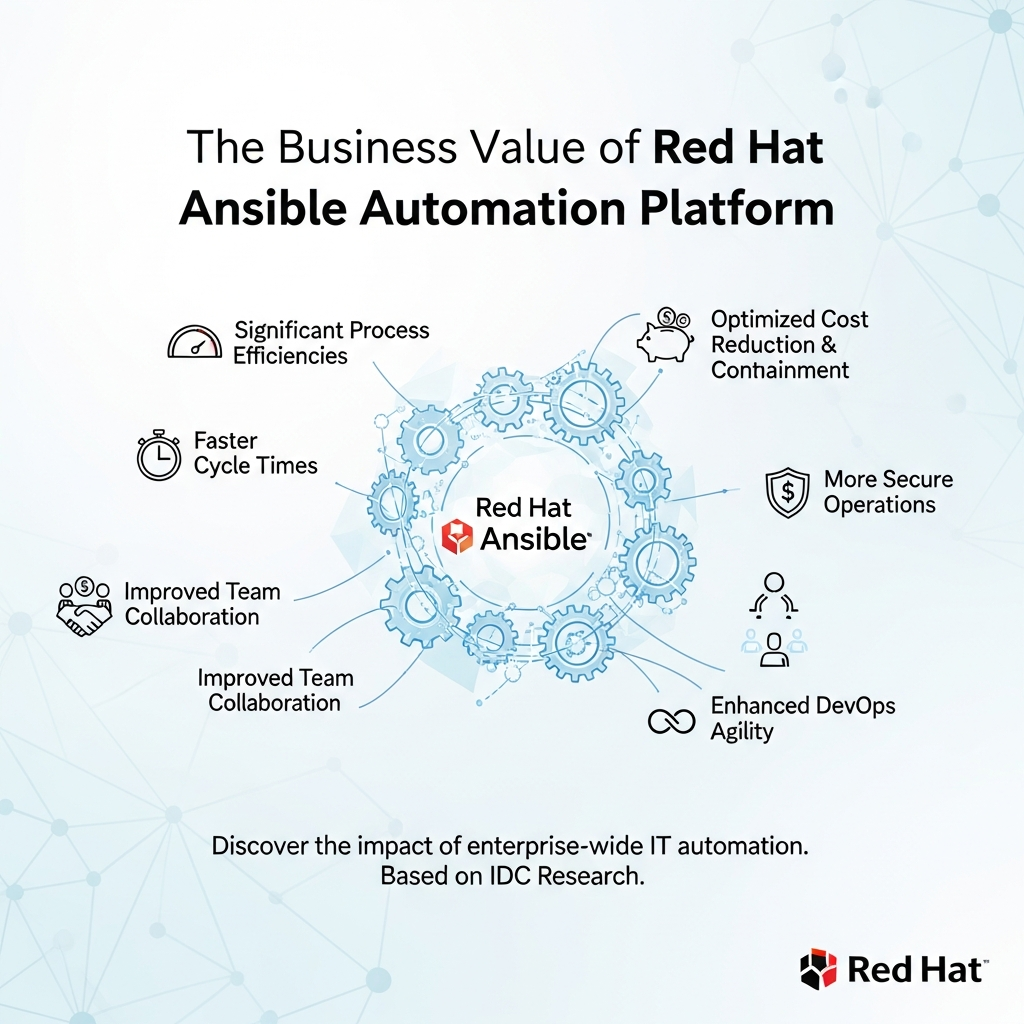
- Process Efficiencies: Ansible Automation Platform streamlines IT operations, container management, and configuration activities. Automating these tasks reduces manual errors and accelerates the completion of tasks.
- Faster Cycle Times: With automation, deployments, updates, and other IT processes become significantly faster. This acceleration allows you to respond more quickly to business demands and market changes.
- Operational Benefits: Ansible provides a programmatic, software-driven approach to IT automation. This leads to improved control, increased service transparency, and better resource utilization across various teams.
- Cost Reduction and Containment: By automating tasks and optimizing resource allocation, Ansible helps you reduce operational costs. Fewer manual interventions mean fewer errors and less time spent troubleshooting.
- Improved Team Collaboration: Ansible promotes consistency across teams by providing a centralized automation platform. This allows for better collaboration and shared knowledge.
- Enhanced Security: Ansible helps improve security by automating security configurations, patching, and compliance checks. This reduces the risk of human error and ensures that security policies are consistently enforced.
- Improved DevOps Agility: Ansible empowers DevOps teams to work more efficiently, enabling faster development cycles and quicker time-to-market for new applications and features.
- Consistent Automation Across Teams: Ansible ensures that automation is applied consistently across all teams, leading to faster decision-making and improved control over your IT environment.
Key Factors Driving Business Value
The Ansible Automation Platform delivers significant business value through various key factors. Here are some of the most important ones:
- Automation of Repetitive Tasks: Automate routine tasks such as server provisioning, application deployments, and configuration management, freeing up valuable IT resources.
- Infrastructure as Code (IaC): Manage your infrastructure with code, enabling version control, collaboration, and consistent deployments.
- Orchestration of Complex Workflows: Orchestrate multi-step workflows across various systems and applications, simplifying complex IT processes.
- Compliance and Security Automation: Automate security configurations, patching, and compliance checks to maintain a secure and compliant IT environment.
- Improved Collaboration: Foster better collaboration between teams by providing a centralized automation platform.
How to Maximize the Value of Ansible Automation Platform
To realize the full potential of Ansible Automation Platform, consider these tips:
- Start Small and Iterate: Begin with a pilot project to test and validate your automation strategies, then gradually expand across your organization.
- Train Your Team: Invest in training and education to equip your team with the skills necessary to develop and manage Ansible automation.
- Leverage Existing Content: Take advantage of pre-built Ansible content, including modules and playbooks, available from Red Hat and the Ansible community.
- Establish Governance: Implement governance policies to ensure consistency, security, and compliance across your automation efforts.
- Monitor and Optimize: Continuously monitor your automation workflows and optimize them for performance and efficiency.
Conclusion
The Red Hat Ansible Automation Platform offers a powerful, flexible, and scalable solution for IT automation. By embracing Ansible, you can unlock significant business value, including increased efficiency, reduced costs, improved security, and enhanced agility. Now is the time to explore how Ansible Automation Platform can transform your IT operations and drive your business forward. This platform serves as a solid foundation for building and operating enterprise-wide automation. It empowers your DevOps and development teams to meet business demands for improved digital functionality, while streamlining and optimizing IT environments.
Summary
Ansible Automation Platform is a powerful tool for automating IT tasks, streamlining workflows, and improving efficiency. Organizations using Ansible experience faster cycle times, reduced costs, and enhanced team collaboration. It empowers teams to meet business demands while optimizing IT environments. It is a foundation for building and operating enterprise-wide automation, offering a flexible framework for building and operating an IT automation foundation across domains and at scale.
FAQ’s
Q: What is Red Hat Ansible Automation Platform?
A: Red Hat Ansible Automation Platform is a comprehensive IT automation solution that enables you to automate a wide range of tasks, from simple configuration management to complex orchestration and application deployment.
Q: What are the key benefits of using Ansible Automation Platform?
A: Key benefits include process efficiencies, faster cycle times, operational improvements, cost reduction, improved team collaboration, enhanced security, and improved DevOps agility.
Q: How does Ansible Automation Platform improve team collaboration?
A: Ansible promotes consistency by providing a centralized platform, allowing better collaboration and shared knowledge across teams.
Q: How can I get started with Ansible Automation Platform?
A: Start with a pilot project, train your team, leverage existing content, establish governance, and continuously monitor and optimize your automation efforts.
“`