
Author : AEM
Troubleshooting Wired and Wireless Networks In Higher Education
Summary
Higher education institutions rely heavily on robust and reliable network infrastructure. This guide provides actionable tips for IT staff to troubleshoot wired and wireless networks effectively. From copper and fiber testing to addressing common wireless issues, you’ll learn how to maintain a high-performing network that supports the demands of students, faculty, and staff.
Introduction
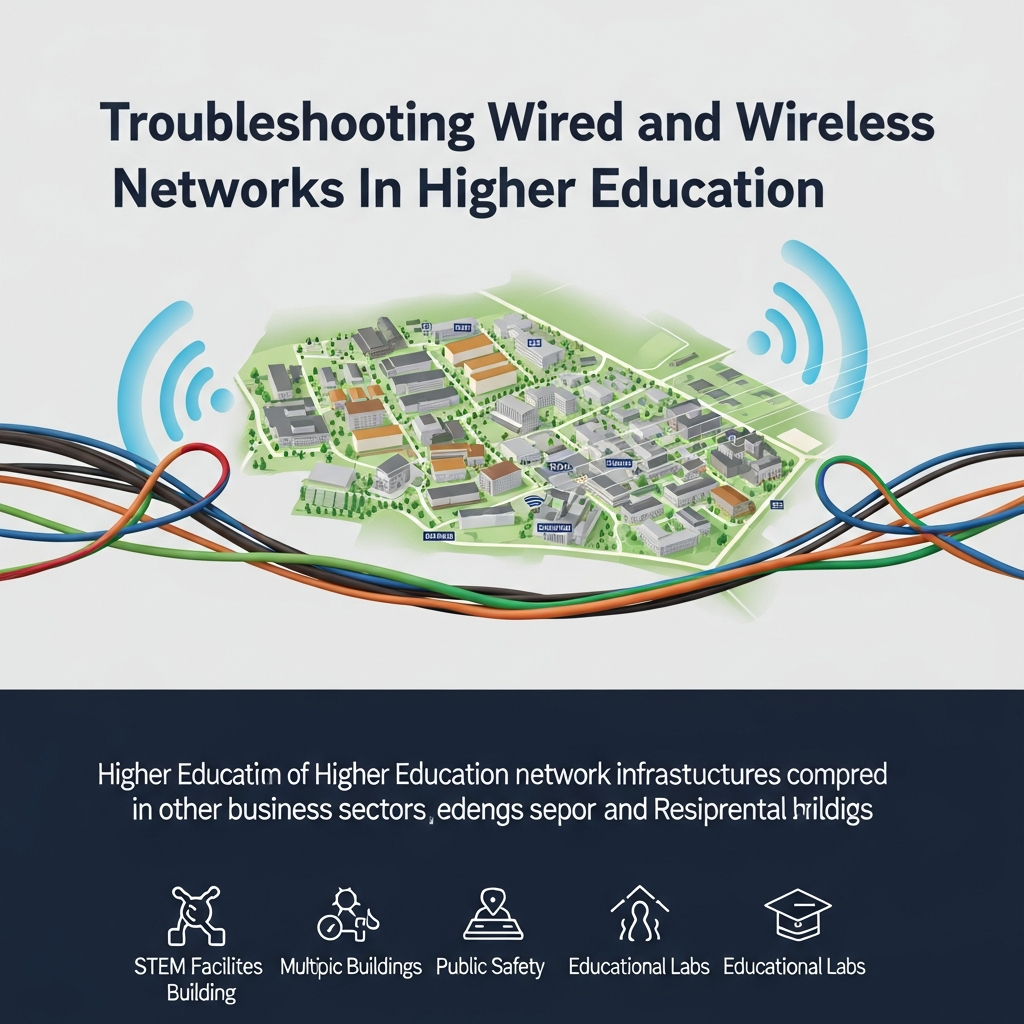
Network infrastructures within higher education are complex environments. They often combine traditional enterprise-grade technologies with cutting-edge infrastructure to support STEM fields and other advanced academic pursuits. Moreover, campuses frequently span multiple buildings and provide round-the-clock connectivity for residential students and faculty. This complexity, combined with the increasing reliance on public safety and IoT technologies, creates unique challenges for IT professionals.
In this guide, we’ll delve into practical troubleshooting techniques for wired and wireless networks in higher education. You’ll gain valuable insights to improve network performance, reduce downtime, and ensure a seamless online experience for everyone.
Common Troubleshooting Scenarios and Solutions
1. Copper and Fiber Testing
Proper testing and maintenance of copper and fiber optic cables are crucial for a stable network. Here are some key considerations:
- Cable Certification: Regularly certify all new and existing copper cabling to ensure it meets the required performance standards (e.g., Cat6, Cat6a). This helps to identify issues before they impact network performance.
- Fiber Optic Inspection: Inspect and clean fiber optic connectors and end-faces. Use appropriate tools to detect and resolve contamination, which can cause significant signal loss.
- OTDR Testing: Utilize an Optical Time-Domain Reflectometer (OTDR) to identify breaks, bends, or other impairments in fiber optic cables. This helps pinpoint the exact location of the problem.
- Documentation: Maintain detailed documentation of your cabling infrastructure, including test results and diagrams. This documentation is invaluable for future troubleshooting.
2. Wireless Network Troubleshooting
Wireless networks are often the first point of contact for users. Therefore, ensure wireless network reliability with the following tips:
- Site Surveys: Conduct thorough site surveys using professional tools to assess the wireless coverage, identify interference sources, and optimize access point placement.
- Channel Planning: Plan your wireless channels carefully to avoid co-channel and adjacent-channel interference. Utilize non-overlapping channels (1, 6, and 11 in the 2.4 GHz band).
- SSID Optimization: Configure your Service Set Identifiers (SSIDs) to provide clear and secure network access. Use different SSIDs for different purposes (e.g., student, faculty, guest).
- Client Density: Consider the number of devices connecting to each access point and design your network accordingly. High-density environments may require multiple access points to serve the same area.
- Regular Monitoring: Use a Wireless Intrusion Detection System (WIDS) or Wireless Intrusion Prevention System (WIPS) to monitor your wireless environment for security threats and performance issues.
3. Addressing Connectivity Issues
Connectivity issues can stem from various factors. Here’s how to address them:
- Device Compatibility: Ensure that all devices, including laptops, tablets, and IoT devices, are compatible with your network’s standards and security protocols.
- DHCP Configuration: Check Dynamic Host Configuration Protocol (DHCP) server configurations. Ensure that IP address ranges are sufficient and that there are no conflicts.
- DNS Troubleshooting: Troubleshoot Domain Name System (DNS) resolution problems by verifying DNS server settings and clearing DNS caches.
- Firewall Rules: Review firewall rules to ensure they aren’t blocking necessary network traffic. Pay special attention to ports and protocols.
4. Network Security and Access Control
Security is paramount. You can enhance network security and control access with these measures:
- Authentication: Implement robust authentication methods like 802.1X to secure your network and manage user access.
- Segmentation: Segment your network into different VLANs (Virtual LANs) to isolate traffic and limit the impact of security breaches.
- Intrusion Detection/Prevention: Deploy an Intrusion Detection System (IDS) and Intrusion Prevention System (IPS) to detect and mitigate security threats.
- Regular Updates: Keep all network devices, including routers, switches, and access points, updated with the latest firmware and security patches.
5. Performance Monitoring and Optimization
Continuous monitoring is key to maintaining a high-performing network.
- Network Monitoring Tools: Use network monitoring tools to track bandwidth usage, latency, packet loss, and other key performance indicators (KPIs).
- Traffic Analysis: Analyze network traffic to identify bandwidth hogs and prioritize critical applications.
- QoS Implementation: Implement Quality of Service (QoS) to prioritize critical traffic like voice and video.
- Proactive Maintenance: Establish a proactive maintenance schedule to address potential issues before they impact users. This includes regular cable inspections and device firmware updates.
Conclusion
Troubleshooting wired and wireless networks in higher education demands a proactive and systematic approach. By implementing the tips and strategies outlined in this guide, you can improve network performance, enhance security, and ensure a positive online experience for students, faculty, and staff. Remember that continuous monitoring, regular maintenance, and adaptation to evolving technologies are essential for long-term network success.
FAQ’s
Q: What are the most common causes of slow network speeds in a higher education environment?
A: Overloaded access points, channel interference, outdated network devices, and insufficient bandwidth allocation are frequent culprits.
Q: How often should I perform site surveys for wireless networks?
A: Conduct initial site surveys during network design and regular follow-up surveys, at least annually or when making significant changes to your network.
Q: What is the best way to handle guest network access?
A: Implement a dedicated guest network with a separate SSID, strong authentication (e.g., captive portal), and limited access to internal resources.
Q: What tools are essential for network troubleshooting?
A: Essential tools include cable testers, OTDRs, spectrum analyzers, packet sniffers, and network monitoring software.
“`