
Author : AEM
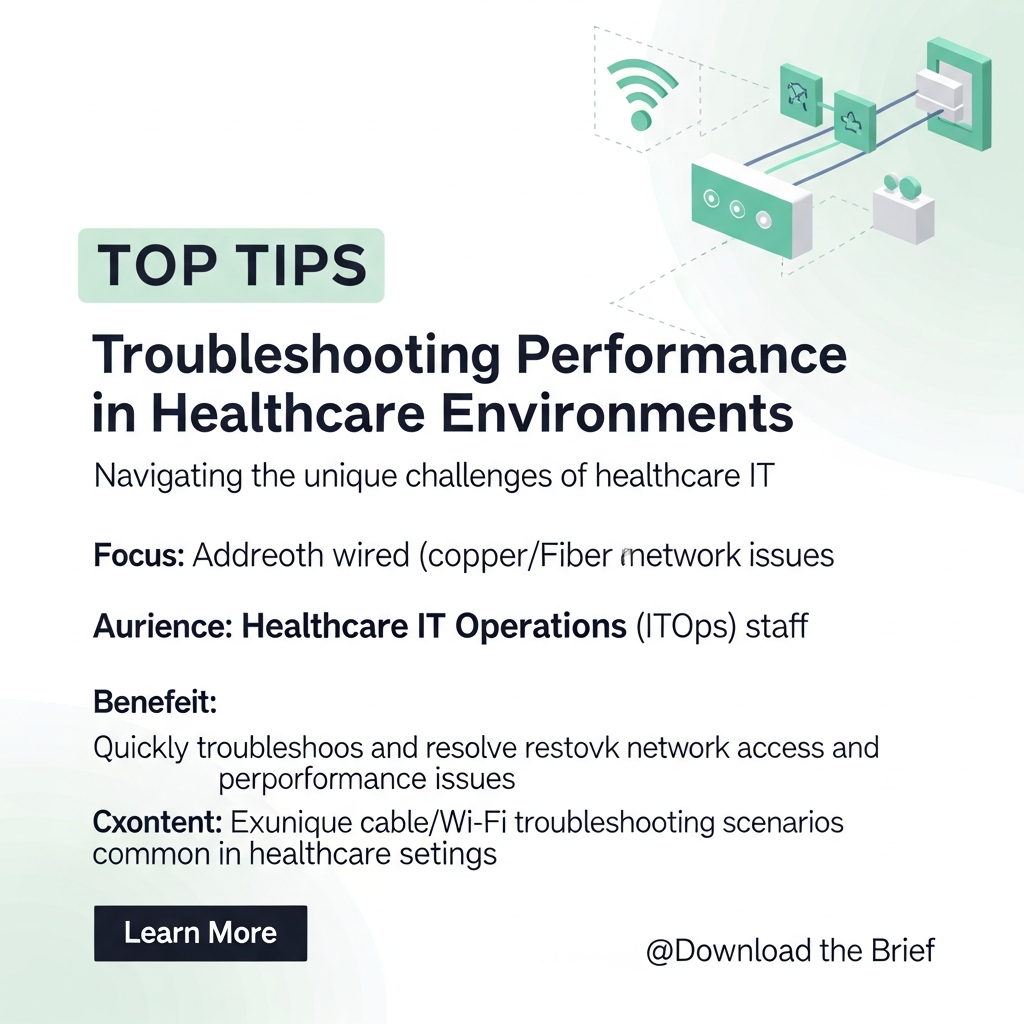
TOP TIPS: Troubleshooting Performance in Healthcare Environments
Summary
Healthcare IT environments present unique challenges due to the critical nature of patient care and the complex mix of wired and wireless connections. This guide provides actionable tips to troubleshoot and optimize network performance in healthcare settings. You’ll learn how to identify and resolve common issues, ensuring seamless connectivity and efficient operations.
Introduction
Healthcare IT is a demanding field. Unlike other enterprise verticals, it relies heavily on consistent, reliable network performance. The stakes are higher – patient care depends on it. From critical medical devices to electronic health records (EHRs), every aspect of modern healthcare relies on a robust and efficient network infrastructure. This means that IT operations (ITOps) teams must be ready to quickly troubleshoot and resolve network access and performance issues at any moment. This guide will provide you with top tips to address and mitigate common network challenges in healthcare environments.
Key Challenges in Healthcare IT
Understanding the unique challenges is the first step in effective troubleshooting. Here are some key factors:
- High Reliance on Wired and Wireless: Healthcare environments utilize a complex combination of wired copper/fiber optic connections and clinical, patient, and guest Wi-Fi networks.
- Mission-Critical Applications: Medical devices, EHRs, and other applications are essential for patient care, and downtime is simply not an option.
- Stringent Security and Compliance: HIPAA and other regulations require robust security measures, which can sometimes impact network performance.
- Diverse User Base: The network must support a wide range of users, from clinicians and nurses to patients and visitors, each with different needs.
Top Tips for Troubleshooting Performance
1. Comprehensive Cable Troubleshooting
Wired connections are the backbone of most healthcare networks. Here’s how to effectively troubleshoot them:
- Verify Physical Connections: Check the physical connections at both ends of the cable for any damage or loose connections.
- Test Cable Integrity: Use a cable tester to check for breaks, shorts, or other issues within the cable. This is a quick and effective way to identify cable problems.
- Consider Cable Type: Ensure that you are using the correct type of cable for the application and distance. Using the wrong type of cable, such as CAT5e instead of CAT6, can cause performance issues.
- Check for Interference: Cables can be susceptible to interference from other electrical devices. Make sure cables are routed away from potential sources of interference.
2. Optimize Your Wi-Fi Troubleshooting
Wireless networks are critical for mobility and ease of access. Improving your Wi-Fi will enhance accessibility:
- Conduct Site Surveys: Perform regular site surveys to identify areas of poor coverage or interference. Utilize tools to map the signal strength and identify dead zones.
- Analyze Wireless Channels: Check for channel congestion and switch to less crowded channels. This will help reduce interference and improve performance.
- Manage User Density: Ensure that your access points can handle the number of connected devices in each area. Consider adding additional access points where necessary.
- Update Firmware: Keep your access points and wireless clients’ firmware up to date to improve performance and security.
3. Leverage Network Monitoring Tools
Network monitoring is key to proactive troubleshooting.
- Monitor Bandwidth Utilization: Keep an eye on bandwidth usage to identify bottlenecks. This will help you identify which applications or devices are consuming the most bandwidth.
- Track Packet Loss and Latency: These metrics can indicate network congestion or other performance issues. High packet loss or latency can cause significant performance problems.
- Implement Alerting: Set up alerts to notify you of potential issues before they impact users. This will enable you to resolve problems before they become critical.
4. Prioritize Critical Applications
Ensure that critical applications receive the resources they need:
- Implement Quality of Service (QoS): Prioritize the traffic of critical applications, such as EHRs and medical imaging, to ensure they receive the necessary bandwidth and low latency.
- Review Application Performance: Monitor the performance of critical applications. This will help you identify any application-specific issues that may be impacting network performance.
5. Device Troubleshooting
Devices, like any other end point on your network, will require troubleshooting:
- Check Device Configuration: Confirm that network devices have the correct IP addresses, DNS settings, and other configurations.
- Test Connectivity: Use ping, traceroute, and other tools to test connectivity to specific devices and diagnose routing issues.
- Examine Device Logs: Regularly review device logs to identify errors, warnings, or other issues.
6. Document Everything
Effective troubleshooting also requires good documentation.
- Maintain an Inventory: Keep an up-to-date inventory of all network devices, including their location, configuration, and any known issues.
- Create a Troubleshooting Guide: Develop a troubleshooting guide with step-by-step instructions for common issues.
- Log Every Issue: Document every network issue, including the symptoms, troubleshooting steps, and resolution.
Conclusion
Troubleshooting network performance in healthcare environments requires a proactive and systematic approach. By following these top tips, you can improve network reliability, minimize downtime, and ensure that your healthcare organization can deliver the best possible patient care. Remember that consistent monitoring, proactive maintenance, and ongoing training are essential for maintaining a high-performing network. By making these tips a part of your daily routine, you can ensure a smooth and efficient network environment.
FAQ’s
- What are the most common causes of network performance issues in healthcare?
- Common causes include: Wireless interference, bandwidth congestion, outdated network devices, and configuration errors.
- What tools are essential for troubleshooting healthcare networks?
- Essential tools include: Cable testers, Wi-Fi analyzers, network monitoring software, and packet capture tools.
- How often should I perform a site survey?
- Conduct site surveys regularly (e.g., quarterly or annually) or whenever you make significant changes to the network environment.
- How can I prioritize critical applications?
- Implement Quality of Service (QoS) to prioritize critical traffic, such as EHRs and medical imaging.
“`